
The Short Version
If your garage door won't move on a frigid morning, the odds are good that it's ice holding the bottom seal to the concrete, not a broken part. The exceptions matter, though: a snapped spring, frayed cable, or fried opener board can look exactly like a "frozen stuck" door, and trying to muscle through those with the opener or a pry bar turns a cheap fix into an expensive one.
Symptoms Worth Paying Attention To
- Door won't move at all and the opener motor hums or strains without lifting it.
- Door lifts an inch or two, then stops or reverses on its own.
- A loud crack or pop right as the door finally breaks free.
- Visible ice or frost along the bottom edge where the weatherstripping meets the slab.
- Door feels noticeably heavier than usual when you lift it manually.
- Remote or wall button does nothing, even though the opener light comes on.
- Door opens fine but closes slowly, unevenly, or slams the last foot.
What a Technician Checks First
1. Ice at the Bottom Seal
This is the most common cause, especially after a day of melting snow followed by a hard freeze overnight — a pattern that happens often with the seasonal swings this area gets. Water seeps under the rubber astragal, refreezes, and glues the door to the concrete. Road salt tracked in from the driveway makes it worse by holding moisture longer.
The fix: Never force it with the opener — that's how you strip gears or bend a panel. Use a hair dryer or heat gun on low along the seal line, or pour warm (not boiling) water mixed with a little ice melt along the edge, then try lifting by hand once it loosens. Skip the metal scraper; it shreds the weatherstripping and you'll be back to this problem the next cold snap.
2. Frozen or Gunked-Up Rollers and Tracks
Old grease thickens in the cold, and any dirt or moisture sitting in the track can freeze solid overnight, binding the rollers. Look for ice crystals or dried gunk along the track and on the rollers themselves.
The fix: Clean the tracks with a cloth, then apply a lithium- or silicone-based garage door lubricant rated for cold temperatures. Avoid household oil or WD-40 — it thins out fast and attracts more grit, which just recreates the problem in a few weeks.
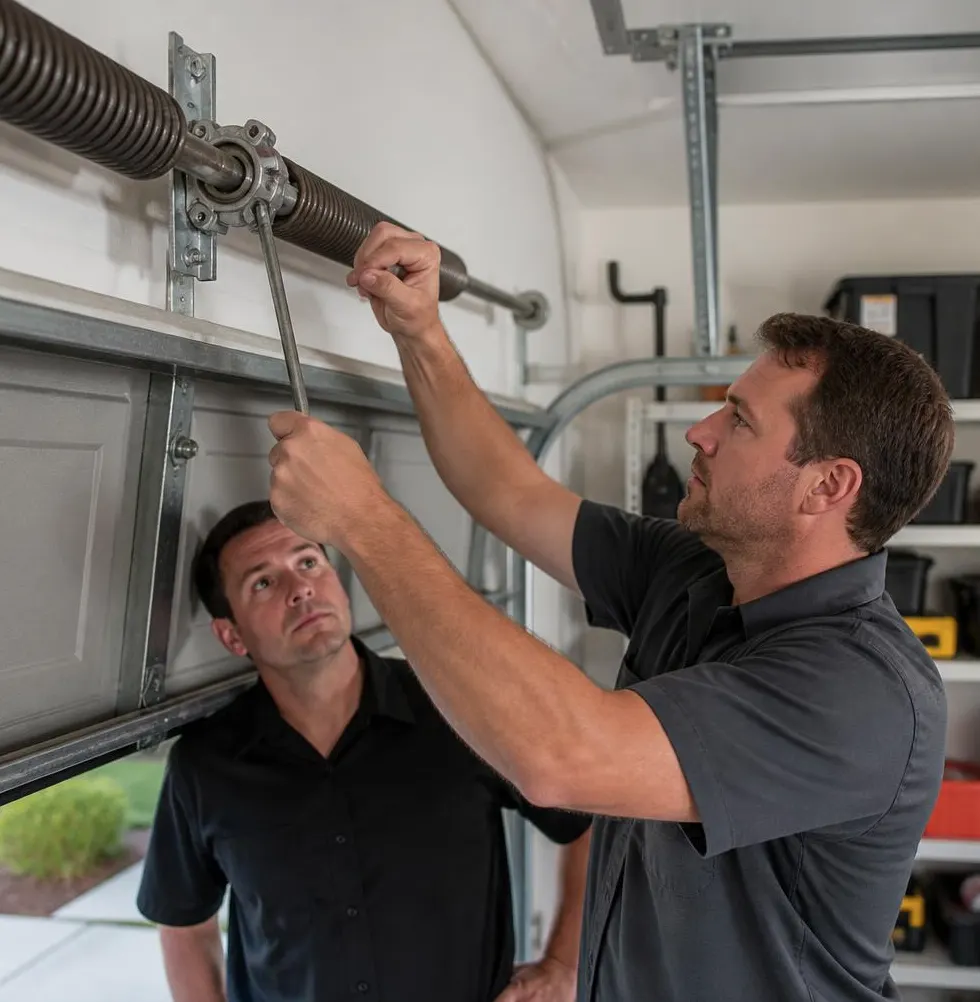
3. Spring Tension Thrown Off by the Cold
Steel contracts in low temperatures, which can make a torsion spring feel noticeably tighter or looser than it did in summer, and a door feel heavier overall. This is also when a spring that's already near the end of its lifespan is most likely to snap, since cold metal is more brittle under stress.
The fix: Disconnect the opener and lift the door by hand about halfway. It should stay roughly in place on its own. If it crashes down or shoots up, the spring tension is off and needs adjustment by someone experienced — this is not a DIY job given how much force torsion springs hold.
4. Opener Sensors and Drive Components
Condensation or frost on the photo-eye sensors near the bottom of the tracks can make the opener think something's blocking the door, so it refuses to close or reverses partway. Belt-drive openers can also stiffen slightly in extreme cold, making the door start and stop jerkily.
The fix: Wipe both sensor lenses clean and dry, confirm they're aimed directly at each other (a small bump from a stored bike or shovel is all it takes to knock them out of alignment), and watch for a steady, solid indicator light on each one.
5. Worn Weatherstripping as the Root Cause
If the bottom seal is cracked, flattened, or pulling away from the door, it lets more moisture in every time it freezes and thaws — which is exactly why the same door seems to stick to the slab every winter. Replacing it is inexpensive compared to dealing with a yearly ice problem.
When to Call Calumet City Garage Door Experts
If the door is iced to the ground, that's usually safe to thaw yourself. But if you hear a crack and the door suddenly won't move at all, or it's lopsided when half open, stop using the opener and call for help — that's spring or cable failure, not ice, and it's a job for our Spring Replacement service. Sluggish movement that doesn't improve after a cleaning and lubrication, or sensors that won't hold alignment, point to an opener issue worth having checked through our Garage Door Opener Repair & Installation service before the next deep freeze locks things up for good.
If your garage door is giving you trouble this winter anywhere in Calumet City, Lansing, Dolton, South Holland, Harvey, Thornton, Homewood, or Burnham, call Calumet City Garage Door Experts and we'll get it moving smoothly again before the next cold snap hits.