
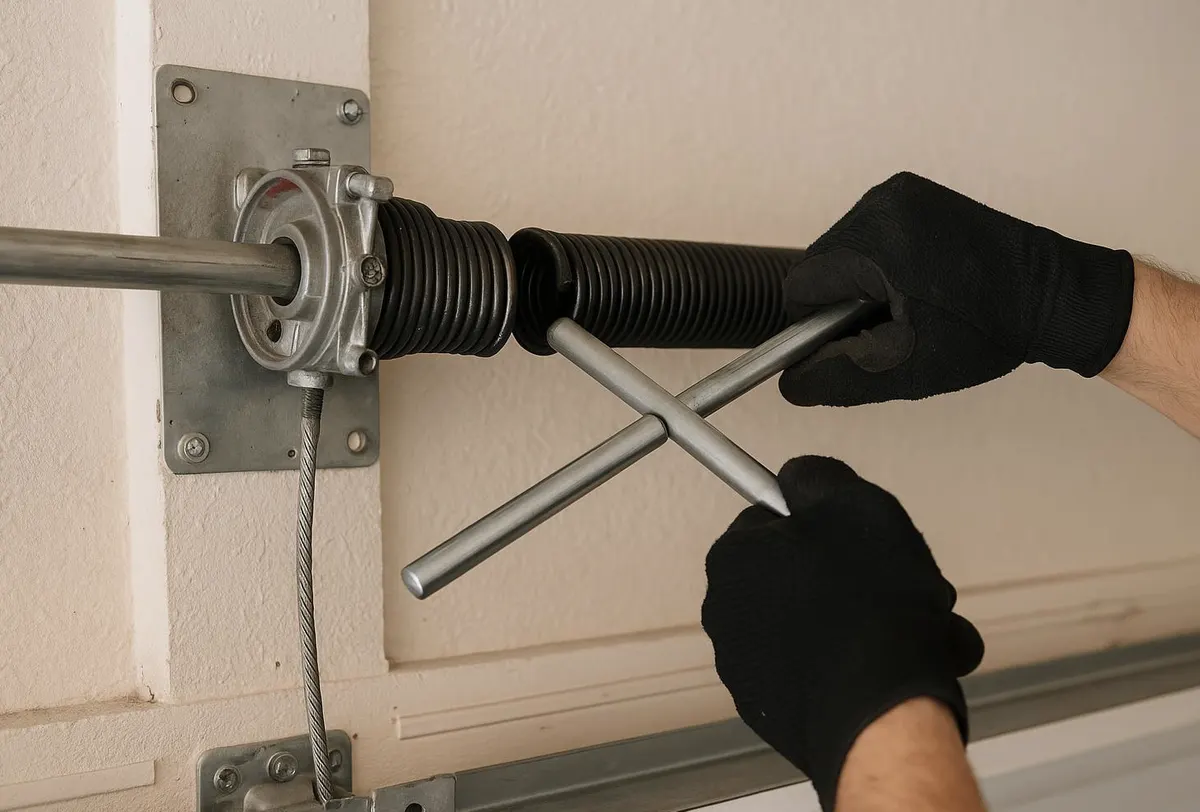
What a Technician Sees on a Call Like This
It usually starts with a side business. Someone's running a small contracting operation, auto detailing setup, or storage/shipping operation out of a detached garage or a converted outbuilding, and the door gets opened and closed forty or fifty times a day instead of the two or three cycles a typical household does. A technician shows up expecting a simple spring replacement and finds a residential torsion spring that's worn out in a fraction of its expected life, an opener motor that's hot to the touch and smells faintly burnt, and track hardware that's loosened from sheer repetition. Meanwhile, back at the house, one spouse is convinced "a garage door is a garage door" and the other is convinced they need something heavier-duty. Both are a little bit right, and a little bit wrong.
The Real Differences Between Commercial and Residential Overhead Doors
Commercial and warehouse overhead doors aren't just bigger versions of a residential door. They're built around different assumptions about how often the door moves and what it protects.
- Cycle life: A standard residential torsion spring is typically rated for around 10,000 cycles, roughly enough for a decade of normal household use. Commercial-grade springs are rated for 20,000, 50,000, even 100,000+ cycles because the door is expected to open and close constantly during business hours.
- Steel gauge and construction: Commercial doors use heavier gauge steel panels and reinforced tracks to handle constant movement and, in many cases, rougher daily contact from equipment, pallets, or vehicles.
- Opener duty cycle: Residential openers are built for intermittent use. Commercial operators are built for continuous or frequent-duty cycles, with motors designed to run hot and often, without burning out.
- Spring systems: Larger commercial doors frequently use multiple torsion springs or heavier-duty counterbalance systems to safely manage the extra weight and cycle demands.
- Reinforcement for wind and impact: Larger commercial door sections often need additional wind-load reinforcement, which matters more here than people think, given this area's spring storm and tornado season.
Why This Actually Matters for Homes and Small Operations Here
This part of Illinois puts real stress on any overhead door, residential or commercial. Cold winters bring ice, slush, and road salt that gets tracked or splashed onto tracks and hardware, accelerating rust on lower-grade steel and gumming up rollers. Humid summers swell wood-framed openings and can affect weatherstripping and seals. Spring storm season adds wind load to the equation, especially for wider doors on detached garages, outbuildings, or small warehouse spaces. And the big seasonal temperature swings mean metal expands and contracts constantly, which is harder on heavier, more frequently used doors than on one that only moves a couple times a day.
If a residential door and opener are being run like a commercial door, these stresses pile up faster than the equipment was ever designed to handle.
Maintenance Needs: Not the Same Schedule
A homeowner with a standard two-car garage door can usually get by with a maintenance check twice a year, roughly once before winter and once before the humid summer stretch: lubricating rollers and hinges, checking spring tension visually, testing the auto-reverse safety feature, and swapping worn weatherstripping before the cold sets in.
A door being used at commercial-level frequency needs more attention, not because it's lower quality, but because it's working harder:
- Spring and cable inspection on a more frequent schedule, since high-cycle use wears components faster.
- Track and hardware checks for loosening bolts and alignment drift caused by constant movement.
- More frequent lubrication of rollers, hinges, and bearing plates to offset the extra cycles.
- Photo-eye sensor and auto-reverse testing, since a door that opens dozens of times a day needs its safety features working every single time, not most of the time.
- Panel and seam inspection for rust, especially on doors exposed to salt spray or road runoff near a driveway or loading area.
- Opener motor and drive system checks, since continuous-duty use puts real wear on belts, chains, and gears.
Settling the Argument
If a residential garage is being used the way a small business or workshop would use it, with frequent daily cycles, the honest answer is that it needs commercial-grade components and a tighter maintenance schedule, not just a stronger opinion in the kitchen. Running a lightweight residential setup at commercial frequency doesn't save money long-term; it just moves the cost from "upgrade now" to "emergency repair later," usually during the worst possible week of winter.
When to Call Calumet City Garage Door Experts
If a door at your home or small operation is cycling far more than a typical household door, or you're noticing premature spring wear, a hot-running opener, or loosening track hardware, it's worth having a technician assess actual usage before winter sets in. Calumet City Garage Door Experts can evaluate whether your current setup is rated for how it's actually being used, recommend the right Spring Replacement for higher-cycle demands, and handle Garage Door Opener Repair & Installation if your motor is being pushed past its intended duty cycle. Getting this right before the cold weather and ice season hits saves a lot of headaches later.
If you're in Calumet City, Lansing, Dolton, South Holland, Harvey, Thornton, Homewood, or Burnham and want a straight answer on what your door setup actually needs, call Calumet City Garage Door Experts and get it settled before winter does it for you.